
Property investment checklist for beginners: 2026 guide
Starting your first property investment in Australia without a clear checklist is how beginners end up overpaying, underpreparing, and locking themselves out of their next purchase before they have even settled the first one. The good news: the process is repeatable, and the steps are well defined.
Here is the core property investment checklist every beginner needs to work through before signing anything:
- Set clear goals. Decide whether you are targeting capital growth, rental yield, or both. Document your strategy in writing before you search for a single property.
- Sort your finances first. Calculate your deposit, account for upfront costs including stamp duty, legal fees, and inspections, and keep a separate cash buffer for vacancies and repairs.
- Get formal loan pre-approval. Lenders apply a 3% serviceability buffer above your actual interest rate in 2026. Know your real borrowing capacity before you bid or make an offer.
- Research your target market. Focus on suburbs with low vacancy rates, population growth, employment diversity, and confirmed infrastructure investment.
- Build your professional team. Engage a mortgage broker, accountant, and conveyancer early. Their combined advice pays for itself many times over.
- Conduct thorough due diligence. Commission building and pest inspections, review strata reports for units, check title and zoning, and get an independent rental appraisal to verify assumptions.
- Run the numbers conservatively. Model cash flow using actual market rents, not aspirational figures, and include all ongoing costs.
- Make a data-driven offer. Set a maximum price based on comparable sales before you negotiate or attend an auction.
- Exchange contracts with protective clauses. Always include finance and building inspection conditions.
- Prepare for settlement. Settlement typically takes 30–90 days, with 42 days being the NSW standard.
- Manage the investment properly post-purchase. Lodge tenant bonds with the relevant state authority, maintain a financial buffer, and review your loan structure annually.
How do you set clear goals and prepare your finances?

The single biggest predictor of whether a first investment works out is whether the investor had a written strategy before they started searching. Not a vague intention, but a documented plan that answers: Am I prioritising capital growth or rental yield? What is my target hold period? How does this purchase position me for the next one?
Strategy-led investing, with a planned multi-year hold period, is the primary driver of long-term success in Australian property. Capital growth and rental yield rarely peak in the same suburb at the same time, so knowing which one you are chasing shapes every decision that follows, from location to property type to loan structure. For a deeper look at how these strategies differ, Wealthstacker’s guide to property investment strategies breaks down the trade-offs clearly.
On the finance side, your deposit is just the starting point. Upfront costs run a significant portion of the purchase price when you factor in stamp duty, legal fees, building inspections, and lender fees on top of your deposit. Budget a separate cash buffer beyond that for maintenance and vacancy periods.
- Deposit: 10–20% of the purchase price (or use equity in an existing property up to 80% of its value)
- Stamp duty: varies by state; not tax-deductible but adds to your cost base for capital gains tax
- Legal and conveyancing fees: typically a few thousand dollars depending on the state
- Building and pest inspections: $500–$900 per inspection
- Lender fees and lenders mortgage insurance (LMI): LMI applies if you borrow above 80% of the property value
- Ongoing buffer: set aside funds for vacancies, rate rises, and unexpected repairs
Pro Tip: Get your loan pre-approval sorted before you start attending open homes. Pre-approval clarifies your actual budget, strengthens your position with vendors, and most lenders issue it valid for a limited period.
One of the most common and costly mistakes beginners make is borrowing to their maximum capacity on the first purchase. That leaves no room for rate rises, emergency repairs, or the deposit on a second property. Treat your borrowing limit as a ceiling, not a target. Wealthstacker’s borrowing capacity guide walks through exactly how lenders calculate serviceability in 2026.
How do you research the Australian property market effectively?
Good market research is not about finding the hottest suburb on a real estate website. By the time a suburb is trending in the media, the best gains are often already priced in. The goal is to identify areas with strong underlying fundamentals before the broader market catches on.
Focus your research on these data points:
- Vacancy rates: target suburbs where rental vacancy sits below 2%
- Population growth and migration trends: areas absorbing new residents consistently tend to sustain rental demand
- Employment diversity: single-industry towns carry far more risk than areas with multiple employment hubs
- Infrastructure investment: confirmed projects such as new train lines, hospitals, and employment precincts drive long-term capital growth
- Historical capital growth: look at 10-year cycles, not just the last 12 months
- Median days on market and auction clearance rates: these tell you whether demand is genuinely strong or just seasonally elevated
Properties near public transport, healthcare, retail, childcare, and schools attract stronger tenant demand and typically command higher rents. That is not a coincidence; it reflects what tenants actually prioritise when choosing where to live.
Building a professional team is just as important as the data you gather. A mortgage broker who specialises in investment lending will access better loan structures than you will find by going directly to a single bank. An accountant who understands property tax will save you money from the first financial year. A conveyancer protects you through the legal transfer process. Engaging all three early in the process is particularly important in 2026, given the complexity of current lending criteria and the tax changes flagged for July 2027.

Wealthstacker’s tools let you model rentvesting versus buying scenarios in real time, which is especially useful if you are still deciding between rentvesting and buying outright as your entry strategy.
What due diligence and financial checks should you do before buying?
Due diligence is where beginner investors most often cut corners, and where the most expensive mistakes happen. A property that looks attractive on paper can hide structural defects, strata disputes, or cash flow assumptions that simply do not hold up.
Building and pest inspections
Never skip these. A qualified building inspector will assess structural integrity, roof condition, plumbing, electrical systems, and signs of damp or subsidence. A pest inspector identifies termite activity, wood rot, and borer damage. The cost of $500–$900 per inspection is trivial against the tens of thousands a missed defect can cost you after settlement.
Strata reports and owners corporation records
If you are buying an apartment or townhouse, request the strata inspection report. This document reveals upcoming major works, sinking fund balances, unresolved disputes, and any planned increases to body corporate fees. Surprises in strata records have derailed more than a few purchases that looked solid on the surface.
Title, zoning, and planning overlays
Your conveyancer will conduct title searches to confirm ownership and identify easements, covenants, or caveats. Check zoning overlays too, particularly if you are considering future development potential.
Running the numbers on cash flow
Model your cash flow conservatively before you commit. Use current market rents, not the optimistic figure a selling agent quotes. Factor in:
- Interest repayments at your actual loan rate, plus a 1% buffer
- Property management fees (typically 7–9% of rent)
- Council rates, water charges, and landlord insurance
- Maintenance allowance (roughly 1% of the property value per year)
- Vacancy periods
Get an independent rental appraisal from a property manager who has no stake in the sale. The figure a selling agent provides is almost always higher than what the market will actually pay.
Depreciation schedules
Properties built after July 1987 qualify for depreciation deductions on the building structure and plant and equipment. A quantity surveyor’s depreciation schedule can generate over $10,000 annually in non-cash tax deductions on a well-appointed property, which directly improves your after-tax cash flow. The fee for the schedule is itself tax-deductible. Many beginners skip this step entirely and leave real money unclaimed.
How do you make an offer, settle, and manage the property?
Making an offer
Set your maximum price before you make the first offer or attend an auction, based on comparable sales from the past 90 days for genuinely similar properties in the same suburb. Look at days on market, vendor motivation, and auction clearance rates. Successful negotiation starts with data, not gut feel.
Always include a finance clause and a building inspection clause in your contract. These conditions protect you if your loan is declined or the inspection reveals a material defect. Without them, you risk losing your deposit.
Settlement process
Your conveyancer handles the legal transfer of ownership: reviewing the contract of sale, conducting title searches, liaising with the seller’s solicitor, and preparing settlement documents. Settlement in Australia typically takes 30–90 days from contract exchange, with 42 days being the standard in NSW. Use that window to finalise your loan, arrange landlord insurance before settlement day, and complete a final inspection of the property.
Post-settlement management
Once you hold the keys, your obligations as a landlord begin immediately. A few things beginners consistently get wrong:
- Bond lodgement: tenant bond money must be lodged with the relevant state authority within strict timeframes. In Victoria that is the Residential Tenancies Bond Authority (RTBA); in NSW, the Rental Bond Board; in Queensland, the RTA. Holding bond money in a personal account is a legal breach in every Australian state, regardless of intent.
- Loan structure: investment property loans should be structured as separate splits, not blended with your home loan. Cross-collateralisation with your primary residence puts your home equity at risk and complicates future borrowing.
- Record keeping: start tracking all rental income and expenses from settlement day, not from 1 July. The ATO allows deductions from the date the property becomes available for rent.
- Financial buffer: keep a cash reserve outside the property for emergencies. Rate rises, extended vacancies, and unexpected repairs all arrive without warning, especially in the first few years.
What do experts recommend for Australian beginners in 2026?
The 2026 lending environment has one feature that catches beginners off guard more than any other: the 3% serviceability buffer. Lenders assess your ability to repay at 3% above your actual interest rate, which meaningfully reduces how much you can borrow compared to what the headline rate might suggest. Factor this into your planning from the start, not after you have found a property you want.
The tax landscape is also shifting. The Federal Budget flagged changes to negative gearing and the capital gains tax discount from July 2027. That does not mean negative gearing is irrelevant now, but it does mean you should not buy a property purely for its tax benefits. The economics only work long-term if the property also grows in value. An accountant who specialises in property investment will help you model the real after-tax position for your specific income and situation.
A few other expert-backed points worth building into your approach:
- Avoid exhausting your borrowing capacity on the first purchase. Leaving capacity unused intentionally gives you room to absorb rate rises, cover emergency repairs, and fund the deposit on a second property when the time comes.
- Engage a quantity surveyor for any property built after 1987. The depreciation deductions are substantial and consistently overlooked by first-time investors.
- Structure your loans with separate splits from day one. It protects your primary residence equity, keeps your tax treatment clean, and preserves flexibility for future acquisitions.
- Landlord insurance is not optional. It covers loss of rent, tenant damage, and public liability. A standard home and contents policy covers none of those things.
- Review your loan annually. Lender policies, interest rates, and your own financial position all change. A loan structure that was optimal at purchase may limit you 18 months later.
For beginners who want to track all of this in one place, Wealthstacker’s portfolio diversification guide covers how to think about your first purchase in the context of a longer-term portfolio plan.
Key takeaways
A successful first property investment in Australia in 2026 requires a written strategy, conservative financial modelling, thorough due diligence, and a professional team engaged before you start searching.
| Point | Details |
|---|---|
| Written strategy first | Document your capital growth or yield goal and a 7–10 year hold period before searching for property. |
| Budget beyond the deposit | Upfront costs run 10–20% of the purchase price including stamp duty, legal fees, and inspections. |
| Serviceability buffer | Lenders apply a 3% buffer above your actual rate in 2026; know your real borrowing capacity early. |
| Depreciation deductions | A quantity surveyor’s depreciation schedule on properties built after 1987 can generate over $10,000 annually in non-cash tax deductions. |
| Separate loan splits | Structure investment loans independently from your home loan to protect equity and preserve future borrowing capacity. |
Start your investment journey with Wealthstacker
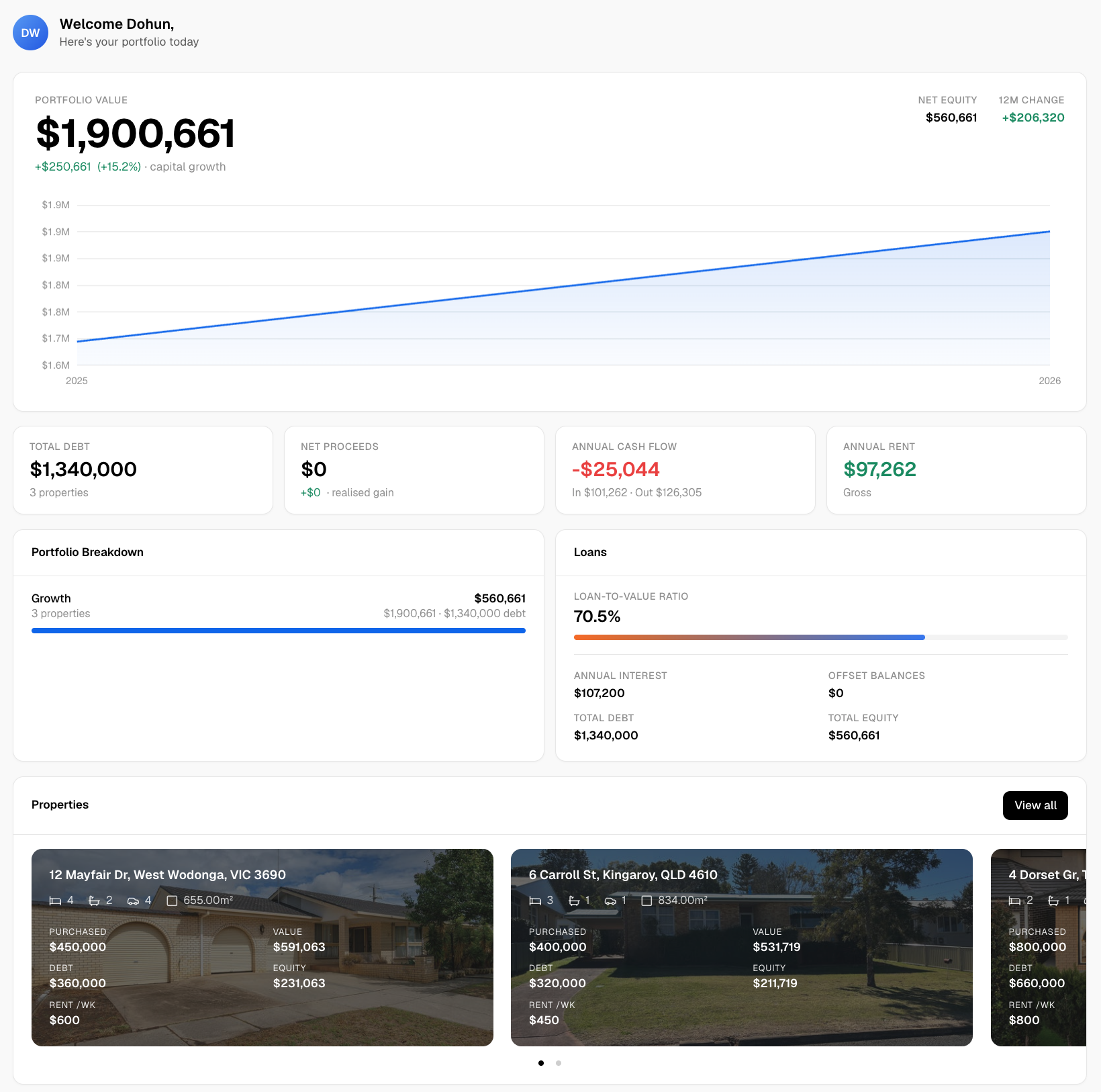
Wealthstacker gives you the tools to assess your borrowing capacity, model rentvesting versus buying scenarios, and track your portfolio’s growth with automated quarterly valuations at no cost. Whether you are still deciding on your first move or ready to run the numbers on a specific property, the platform’s AI-driven modelling gives you a real picture of your financial position before you commit.
Start planning your investment with Wealthstacker today.