
Property investment decision shortcuts: 2026 guide
TL;DR:
- Property investment shortcuts are structured filters that help investors quickly reject unsuitable properties based on predefined criteria. They protect returns by avoiding costly mistakes such as skipping inspections and overestimating rental income. Applying these methods consistently enables building a resilient, well-diversified portfolio while safeguarding borrowing capacity.
Property investment decision shortcuts are systematic, data-driven frameworks that help investors quickly identify viable properties by filtering against predefined criteria instead of relying on gut feel or time-consuming trial and error. The industry term for this process is “investment due diligence filtering,” and the shortcut approach simply applies it faster. Poor filtering costs real money: skipping professional building and pest inspections can lead to structural defects costing $30,000–$50,000 after settlement. Wealthstacker’s modelling tools and the binary gate methodology used by experienced Australian investors both show that disciplined shortcuts protect returns without cutting corners.
1. What are property investment decision shortcuts?
Property investment decision shortcuts are structured filters applied at each stage of the buying process to quickly accept or reject a property. They are not about skipping steps. They are about doing the right steps in the right order so you spend time only on properties that meet your criteria.

The concept draws on the binary gate methodology, where each filter either passes or fails a property before you move to the next stage. Binary gate filtering uses publicly available data on zoning, flood overlays, and vacancy rates before you ever speak to an agent. This preserves your time and your emotional energy for deals that actually stack up.
Without shortcuts, investors often drift. First-time investors waste 6–12 months due to emotional decisions and a lack of formal pre-approval. A structured framework eliminates that drift by giving you a clear go or no-go at every decision point.
2. Key criteria for evaluating investment properties quickly
Every effective shortcut framework starts with the same core criteria. These are the filters that separate a viable investment from a time-wasting distraction.
Location quality
A healthy rental market carries vacancy rates below 3%. Above 4% signals weak tenant demand, which forces you to adjust your yield expectations downward. Check vacancy data, infrastructure pipelines, and population growth trends before anything else.
Financial feasibility
Gross yield is not the number that matters. Net yield runs 1.5–2.5 percentage points lower than gross yield once you account for agent fees, maintenance, vacancy, and land tax. On a $700,000 property, that gap equals $10,500–$17,500 in annual costs that a gross yield figure hides entirely. Always compute net yield before proceeding. The Wealthstacker gross rental yield guide explains this calculation in plain terms.
Property condition
A building and pest inspection is non-negotiable. Cheap or skipped reports expose you to structural defects that cost tens of thousands to fix after settlement. Budget for a quality inspection from a licensed inspector every time.
Strategy alignment
Every property must fit your stated investment goal. Are you targeting capital growth, rental yield, or a balance of both? Balanced approaches targeting 4–5% yield in high-growth areas consistently outperform pure yield chasing. Understand the difference between rental yield and capital growth before you set your filter.
Borrowing capacity
Your borrowing capacity shapes every acquisition decision. Run a borrowing capacity check before you shortlist properties, not after you fall in love with one. This keeps your pipeline realistic and your portfolio scalable.
Pro Tip: Set your filters in writing before you start searching. A written checklist removes the temptation to rationalise a property that fails one of your gates.
3. How to apply a quick property investment decision framework
A structured framework moves from macro to micro. You start wide and narrow down fast, rejecting properties at each stage before committing more time or money.
- Run a macro market screen. Identify cities or regions with population growth, low unemployment, and infrastructure investment. Reject markets showing oversupply or declining rental demand immediately.
- Apply suburb-level binary gates. Check vacancy rates, flood and bushfire overlays, zoning restrictions, and days on market for comparable rentals. Early suburb screening using public data preserves your resources for properties worth inspecting.
- Verify rental income independently. Agent appraisals are often optimistic. Check comparable leased properties and days-on-market data to form your own rental estimate. Never model income from an agent’s appraisal alone.
- Stress-test your financial assumptions. Model the deal at a vacancy rate of 5% and at interest rates 1.5 percentage points above current levels. If the deal breaks under those conditions, it is not the right deal. Use investment property forecasting methods to build conservative scenarios.
- Conduct physical due diligence only on shortlisted properties. Order building and pest inspections, review strata records if applicable, and confirm council zoning. This step costs money, so only reach it after passing all earlier gates.
- Walk away fast when a gate fails. Successful portfolio building relies on willingness to walk away from properties that fail key criteria early. Emotional attachment at this stage is the most common cause of poor acquisitions.
Pro Tip: Keep a simple spreadsheet with your binary gate criteria. Log every property you assess and the gate where it failed. After 10 properties, you will see patterns that sharpen your filters further.
4. Common pitfalls and how shortcuts help you avoid them
Most investor mistakes are predictable. A disciplined shortcut framework catches them before they cost you money.
Skipping inspections
Cutting costs on building and pest reports is the most expensive false economy in property investment. Structural defects, termite damage, and drainage failures are invisible to the untrained eye. The remediation bill arrives after settlement, when you have no leverage.
Overestimating rental income
Agent appraisals reflect optimism, not market reality. Investors who model income from agent estimates rather than comparable leased data routinely discover their yield is lower than projected within the first six months of ownership.
Chasing yield without growth
Over-indexing on yield at the expense of capital growth produces what experienced investors call “dead-end assets.” These properties generate income but do not build equity, which limits your ability to fund the next acquisition. A balanced approach targeting both metrics produces better long-term outcomes.
Emotional bidding
Auctions and competitive markets create pressure to exceed your budget. A pre-set maximum bid, written down before you arrive, is the only reliable defence against this. Your shortcut framework should include a hard budget ceiling at the financial feasibility gate.
Ignoring total holding costs
The gap between gross and net yield is where many deals fall apart on paper. Body corporate fees, property management fees, maintenance reserves, insurance, and land tax all reduce your actual return. Model every cost before you commit.
| Pitfall | Shortcut that prevents it |
|---|---|
| Skipping inspections | Mandatory inspection gate before any offer |
| Overestimated rental income | Independent comparable lease verification |
| Yield-only focus | Strategy alignment filter requiring growth metrics |
| Emotional bidding | Written budget ceiling set at financial feasibility gate |
| Hidden holding costs | Net yield calculation replacing gross yield at screening |
5. How shortcuts support building a resilient portfolio
A single good acquisition is not a portfolio. The shortcuts that work for one property must scale across multiple acquisitions without overextending your borrowing capacity or concentrating your risk.
Match each acquisition to a clear strategy
Buying without a defined investment strategy is the leading cause of portfolio stagnation. The data is stark: 71% of Australian rental property owners hold just one property, and only 6% own three or more. A shortcut framework forces you to define your strategy before each acquisition, not after.
Diversify asset types and locations
Concentration risk is the silent portfolio killer. Holding three properties in the same suburb exposes you to a single market event. Your filtering criteria should include a location diversity check that flags overexposure to any one area or asset class.
Model borrowing capacity from the outset
Each acquisition changes your debt-to-income ratio and your ability to fund the next one. Run a borrowing capacity assessment before you commit to any purchase. This tells you how many acquisitions your current income and equity can support, and in what order.
Stress-test cash flow at portfolio level
A property that works in isolation may strain your cash flow when combined with existing holdings. Model your total portfolio income and expenses under conservative vacancy and interest rate assumptions. This is where most investors discover they are more exposed than they realised.
Review loan structures regularly
Treating property as a one-off purchase rather than managing it like a business is the biggest long-term mistake. Schedule annual loan structure reviews to identify refinancing opportunities, release equity for the next acquisition, and adjust for market changes.
Pro Tip: Plan your acquisition order before you buy your first property. Knowing which asset type you will buy second and third shapes the loan structure and equity strategy you need from day one. Wealthstacker’s portfolio modelling tools make this planning concrete rather than theoretical.
Wealthstacker: your property decision toolkit
Applying a disciplined shortcut framework is straightforward in theory. Executing it consistently across multiple properties and market conditions is where most investors need support.
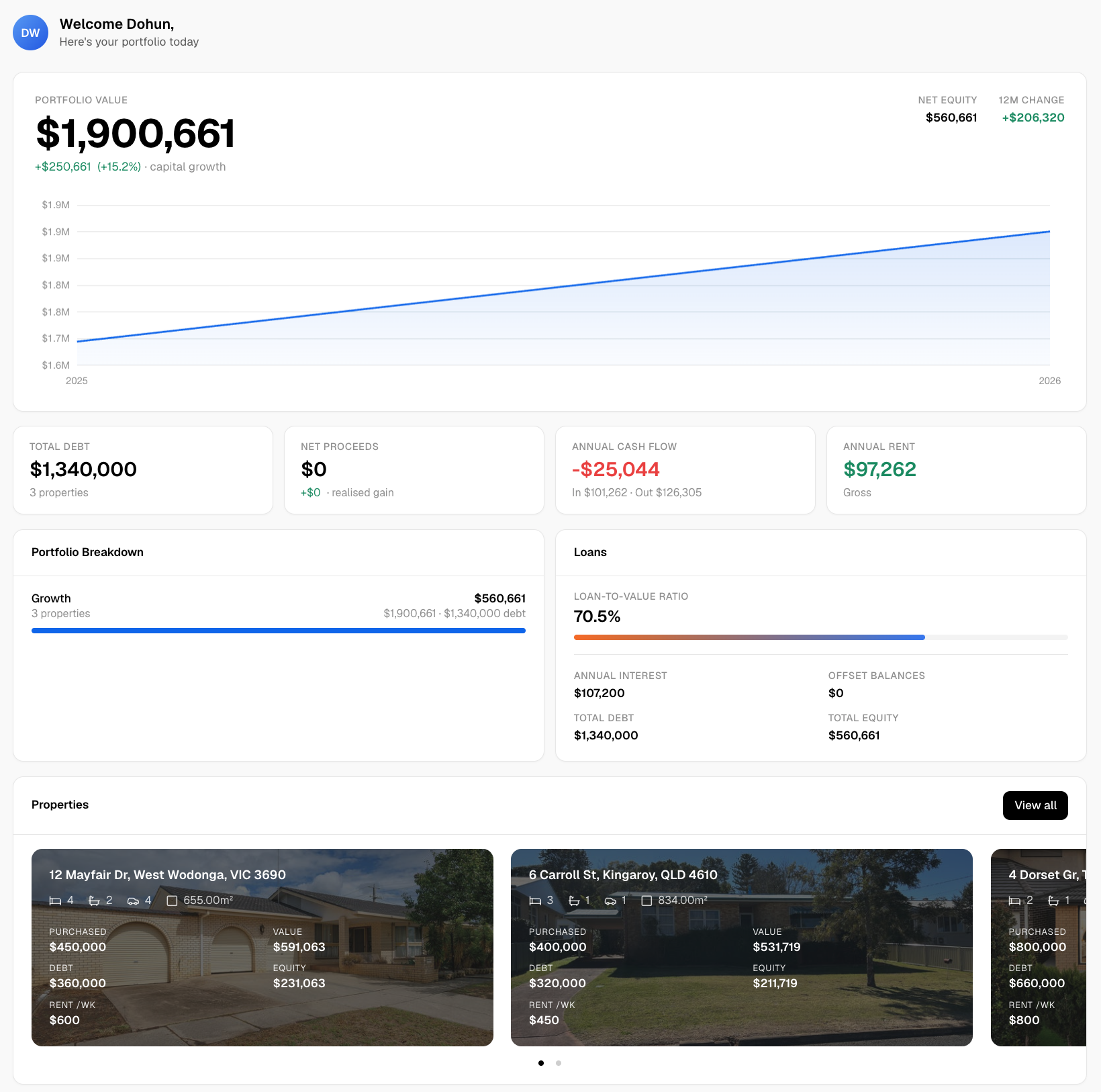
Wealthstacker is built for exactly this. The property investment app integrates key financial metrics, automated quarterly valuations, and AI-powered modelling to help you screen properties, calculate net yields, and stress-test cash flow scenarios in real time. You can model both rentvesting and direct ownership strategies, assess your borrowing capacity, and track your portfolio’s performance as market conditions shift. Wealthstacker gives you the data infrastructure that turns a good shortcut framework into a repeatable, scalable process. Learn more at wealthstacker.com.au.
Key takeaways
The most effective property investment decision shortcuts are structured, data-driven filters applied in sequence, from macro market screening to property-level due diligence, that reject unsuitable properties early and protect your time, capital, and borrowing capacity.
| Point | Details |
|---|---|
| Use binary gate filtering | Reject properties at each stage using public data before spending time or money on inspections. |
| Calculate net yield, not gross | Net yield runs 1.5–2.5 percentage points below gross; always model the real number. |
| Verify rental income independently | Check comparable leased properties, not agent appraisals, to set realistic income assumptions. |
| Align every acquisition to strategy | Define your growth vs yield goal before shortlisting; misaligned assets stall portfolio growth. |
| Model borrowing capacity early | Assess your debt capacity before each purchase to keep your acquisition pipeline sustainable. |
FAQ
What are property investment decision shortcuts?
Property investment decision shortcuts are structured filtering frameworks that help investors quickly assess and reject properties that do not meet predefined criteria. They apply binary gate logic, moving from macro market data to property-level due diligence, to save time and reduce emotional bias.
How do I evaluate investment properties quickly?
Start with vacancy rates, location growth indicators, and a net yield calculation. Screening suburbs using public data before speaking to agents is the fastest way to eliminate unsuitable properties early.
What vacancy rate should I target for a rental property?
Target markets with vacancy rates below 3%. Rates above 4% signal weak tenant demand and require a downward adjustment in your rental income assumptions.
Why is net yield more important than gross yield?
Net yield accounts for all holding costs including management fees, maintenance, vacancy, and land tax. Gross yield overstates returns by $10,500–$17,500 annually on a typical $700,000 property, making it an unreliable basis for investment decisions.
How do shortcuts help build a long-term property portfolio?
Disciplined shortcuts keep each acquisition aligned to your investment strategy, protect your borrowing capacity, and prevent overexposure to any single market. They turn reactive buying into a repeatable process that scales across multiple properties.